For small businesses, one of the most common digital marketing questions is: should I invest in SEO or Google Ads?
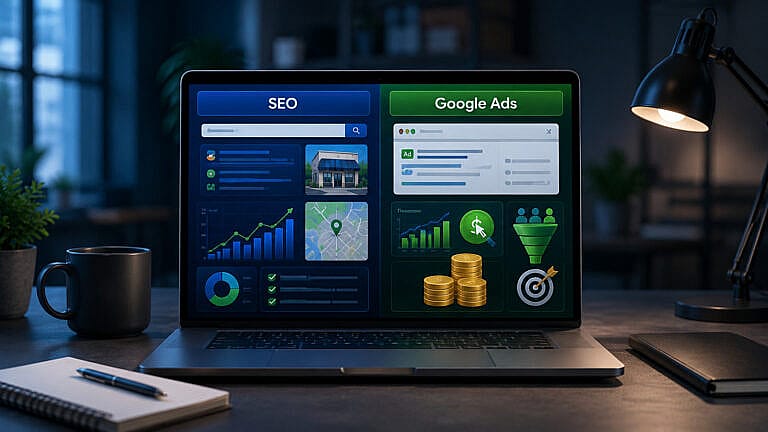
Both can help your business appear on Google, attract website visitors, and generate leads. But they work in different ways. SEO helps your website earn organic visibility over time, while Google Ads helps your business appear quickly through paid advertising.
The best choice depends on your budget, timeline, competition, and business goals. For many small businesses, the smartest strategy is not choosing one forever. It is understanding when to use SEO, when to use Google Ads, and how both can work together.
What Is SEO?
SEO stands for Search Engine Optimization. It is the process of improving your website so search engines can understand your content and show it to the right people. Google’s SEO Starter Guide explains that SEO helps search engines understand your content and helps users decide whether they should visit your site.
For small businesses, SEO usually focuses on improving your website structure, service pages, local visibility, content quality, and online trust.
The main parts of small business SEO usually include:
- Clear service pages and helpful website content
- Page titles, headings, and meta descriptions
- Local SEO, reviews, and Google Business Profile visibility
- Website speed, mobile experience, and internal links
SEO is usually a long-term strategy. It may take time to build results, but strong SEO can continue bringing traffic and leads without paying for every click.
What Are Google Ads?
Google Ads is Google’s online advertising platform. It allows businesses to create paid ads that can appear when people search for products or services. Google’s Google Ads guide explains how businesses can use campaigns, goals, targeting, and budgets to reach potential customers.
For small businesses, the most common campaign type is Search Ads. These ads can appear when someone searches for high-intent phrases like “emergency plumber near me,” “Google Ads management,” “web design company,” or “SEO agency near me.”
The biggest advantage of Google Ads is speed. You can start appearing in sponsored search results much faster than waiting for SEO rankings to grow. However, Google Ads requires an ongoing budget. When you stop paying, your ads usually stop showing.
SEO vs Google Ads: Quick Comparison
| Feature | SEO | Google Ads |
|---|---|---|
| Speed | Slower to build | Faster to launch |
| Cost model | Invest in content, website, and optimization | Pay for clicks, impressions, or conversions |
| Long-term value | Strong long-term growth potential | Stops when budget stops |
| Trust | Organic results can build strong trust | Ads can convert well but are clearly sponsored |
| Best for | Long-term visibility and authority | Fast leads, testing, and promotions |
| Main risk | Takes time and needs consistency | Can waste budget if poorly managed |
| AI search value | Helps search engines and AI understand your business | Useful for paid visibility, but not a replacement for SEO |
Benefits of SEO for Small Businesses
SEO is powerful because it builds your website as a long-term business asset. Instead of paying for every visit, you invest in improving your website so it can attract visitors naturally through Google Search and other search engines.
A well-optimized small business website can rank for service pages, local searches, blog articles, pricing questions, and comparison keywords. This means your website can reach people at different stages of the buying journey, from early research to ready-to-buy searches.
SEO also helps build trust. Many users see organic results as more credible because they are not paid ads. When your business appears naturally for helpful searches, it can make your brand look more established and reliable.
Another important benefit is long-term value. SEO does not stop working the moment you stop spending. Your website still needs updates and maintenance, but strong pages can continue bringing traffic over time.
If your business wants sustainable growth, stronger website visibility, and better trust, SEO is one of the best digital marketing investments.
Challenges of SEO
SEO is not instant. It can take time for search engines to crawl your website, understand your content, compare your pages with competitors, and reward your improvements.
This is one of the biggest reasons some small businesses get frustrated with SEO. They expect immediate leads, but SEO usually works best when it is treated as a long-term strategy.
SEO also requires consistency. Publishing one blog post or updating one page is usually not enough in a competitive market. Your website needs useful content, technical health, local signals, internal links, reviews, and ongoing improvements.
For small businesses, the biggest SEO challenge is patience. The results can be valuable, but they usually take time to build.
Benefits of Google Ads for Small Businesses
Google Ads is useful when you need visibility quickly. If your business is new, launching a service, promoting a special offer, or trying to generate leads this month, Google Ads can help you appear in front of people who are already searching.
Google Ads can be especially useful for:
- Fast lead generation
- Testing keywords, locations, and offers
- Promoting high-value services or seasonal campaigns
Another advantage is control. You can choose your target locations, keywords, budget, ad schedule, landing pages, and campaign goals. This makes Google Ads useful for testing which services, offers, and locations bring the best leads.
Google Ads can also give you useful marketing data. For example, if certain keywords produce more calls or form submissions, you can use that information to improve your SEO strategy later.
When managed properly, Google Ads can be a strong short-term growth tool.
Challenges of Google Ads
Google Ads can work very well, but it can also waste money if it is not managed carefully. Google explains that ads are selected through an auction system, which means competition, bid strategy, ad quality, and relevance can all affect performance. You can learn more from Google’s official guide on how the Google Ads auction works.
One common mistake is sending paid traffic to a weak landing page. If your website is slow, unclear, or difficult to use, people may click your ad and leave without contacting you.
Another challenge is cost. In competitive industries, clicks can become expensive. If your campaign does not have strong keyword targeting, negative keywords, conversion tracking, and regular optimization, your budget may be spent without producing enough real leads.
Google Ads is not just about turning on a campaign. It needs strategy, testing, and ongoing management.
Which Is Better for Fast Results?
Google Ads is usually better for fast results. A campaign can start bringing visitors after setup and approval, which makes it useful when a business needs traffic quickly.
This is especially helpful for new businesses that do not yet have organic rankings. It is also useful for limited-time offers, emergency services, seasonal promotions, and competitive local markets where SEO may take longer.
However, fast traffic does not always mean profitable traffic. To get good results from Google Ads, your business needs strong ad copy, proper targeting, conversion tracking, and a landing page designed to turn visitors into leads.
Which Is Better for Long-Term Growth?
SEO is usually better for long-term growth. It helps your business build organic visibility, trust, and authority over time.
A strong SEO strategy can help your website rank for many different search terms. This can include service keywords, local keywords, blog topics, and customer questions. Over time, this can reduce your dependency on paid ads and help your website become a stronger business asset.
In 2026, SEO is also important because search is changing. Google’s guide to optimizing for generative AI features in Search explains that SEO fundamentals still apply to AI-powered search experiences such as AI Overviews and AI Mode.
That means clear content, crawlable pages, helpful answers, structured information, and trustworthy business signals still matter.
Which One Should a Small Business Choose First?
The right choice depends on your current situation. A new business that needs calls right away may need Google Ads first, while a business focused on long-term growth should not ignore SEO.
A simple way to decide is:
- Choose SEO first if you want long-term growth, stronger brand trust, and sustainable traffic.
- Choose Google Ads first if you need leads quickly or want to test services, keywords, and locations.
- Choose both if you want immediate visibility now and stronger organic growth for the future.
If your website needs a stronger foundation for both SEO and paid ads, HMDIA can help with web design, SEO, and digital marketing services.
The Best Strategy: Use SEO and Google Ads Together
For most small businesses, SEO and Google Ads work better together than separately.
Google Ads can help you appear quickly for high-intent searches. SEO can help you build long-term organic visibility and reduce your dependency on paid traffic. At the same time, Google Ads data can show which keywords, services, and locations generate the best leads, and that information can guide your SEO content strategy.
For example, a small business could run Google Ads for “web design services near me” while building SEO content around topics like “how much does a website cost in Canada,” “local SEO checklist,” and “SEO vs Google Ads.”
This creates a stronger digital marketing system. Ads help you get attention now. SEO helps you build authority for the future.
SEO, Google Ads, and AI Search in 2026
Small businesses should not think only about traditional Google rankings anymore. People are now using Google AI Overviews, ChatGPT, Gemini, Perplexity, and other AI tools to ask business questions and compare service providers.
To improve visibility in this new search environment, your business needs clear website content, helpful service pages, strong local SEO, consistent business information, real customer reviews, and trusted mentions across the web.
Google Ads can help you appear quickly in paid placements, but SEO builds the content and trust signals that help both search engines and AI systems understand your business.
This is why SEO is not becoming less important because of AI. It is becoming more important.
Final Verdict: SEO or Google Ads?
SEO is better for long-term visibility, trust, and sustainable growth. Google Ads is better for fast traffic, quick testing, and immediate lead generation.
For most small businesses, the best answer is not SEO vs Google Ads. The best answer is SEO and Google Ads working together.
If you need leads quickly, start with Google Ads and a strong landing page. If you want long-term growth, invest in SEO. If you want the strongest digital marketing strategy, use both.
At HMDIA, we help small businesses build professional websites, improve SEO, manage Google Ads, and create digital marketing strategies that support real business growth.
Explore our web design, SEO, and digital marketing services or create a free listing in the HMDIA Business Directory to improve your online visibility.