Local SEO is one of the most valuable marketing strategies for small businesses in 2026. When people need a local service, they usually search before they call, visit, or book. They may search for “web designer near me,” “SEO services in Kitchener,” “best restaurant in Richmond Hill,” or “plumber near me open now.”
If your business is not visible in Google Search, Google Maps, and AI-powered search results, you may lose customers to competitors who appear first and look more trustworthy online.
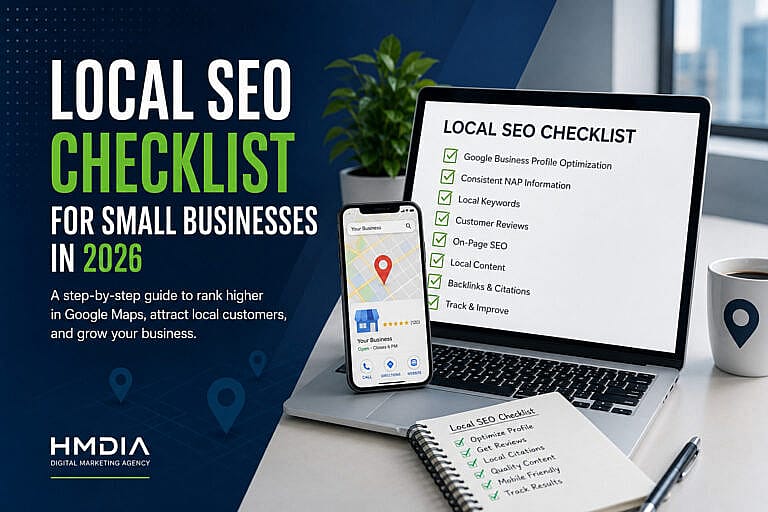
This local SEO checklist will help small businesses improve visibility, build trust, and generate more local leads.
Why Local SEO Matters in 2026
Local SEO helps your business appear when people search for services or products in a specific area. It is especially important for service businesses, restaurants, clinics, contractors, real estate professionals, beauty businesses, consultants, and local retailers.
Google explains that local ranking is mainly influenced by relevance, distance, and prominence. In simple terms, Google wants to understand what your business does, where you serve customers, and how trusted or well-known your business is. You can read Google’s official explanation here: How to improve your local ranking on Google.
In 2026, local SEO is not only about ranking on Google. People are also using AI search tools, Google AI Overviews, ChatGPT, Gemini, and Perplexity to compare businesses and ask for recommendations. That means your business information needs to be clear, consistent, helpful, and easy for search engines and AI systems to understand.
1. Optimize Your Google Business Profile
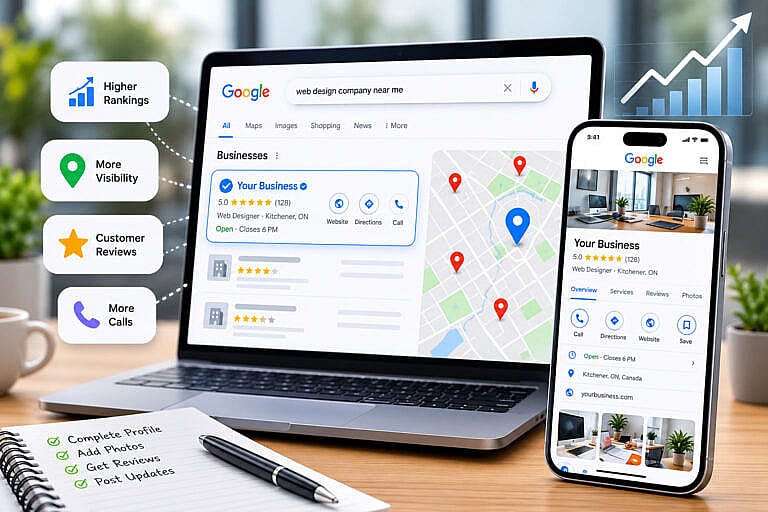
Your Google Business Profile is one of the most important parts of local SEO. It can help your business appear in Google Maps, the local pack, and branded search results.
Start by making sure your profile is complete and accurate. Your business name, phone number, website, address or service area, hours, services, and business category should all be correct. Your description should clearly explain what you offer and which areas you serve.
Photos also matter. Add real photos of your work, team, office, products, or service results. A profile with useful photos often looks more trustworthy to potential customers than a profile with no visual information.
Do not add extra keywords to your business name unless they are part of your real legal or public business name. A natural, accurate profile is better for long-term SEO than trying to force keywords into every field.
2. Keep Your Business Information Consistent Everywhere
Your business name, address, and phone number are often called NAP information. This information should be consistent across your website, Google Business Profile, social media pages, directories, and any other online listings.
For example, if your website uses “Unit 5,” your directory listings should not use “Suite 5” in some places and “#5” in others. Small differences may not always cause serious issues, but consistency helps search engines and customers trust your information.
Also make sure your website footer, contact page, and service pages show clear contact details. If you serve customers remotely or travel to customer locations, explain your service areas clearly instead of hiding that information.
3. Add Your Business to Trusted Local Directories
Local directories help customers discover your business and can support your local SEO through citations and brand mentions. Start with important platforms such as Google Business Profile, Bing Places, Apple Business Connect, Yelp, Facebook, and industry-specific directories.
You can also create a free business listing in the HMDIA Business Directory. This gives your business another online presence and can help potential customers find your services.
The goal is not to submit your business to hundreds of low-quality directories. Focus on trusted, relevant, and local platforms that real people may use.
4. Build Strong Service and Location Pages
Your website should clearly explain what you do and where you do it. A small business website should not rely only on the homepage to rank for every service and city.
If you offer multiple services, create separate service pages. If you serve multiple cities, create helpful location pages. Each page should have unique content, not copied paragraphs with only the city name changed.
For example, a web design company serving Kitchener and Waterloo could have a page focused on WordPress web design, another page for SEO services, and another page explaining services for the Kitchener-Waterloo area. Each page should answer real customer questions, explain the service, mention the location naturally, and include a clear call to action.
If your business needs a website built for local SEO, you can explore HMDIA’s web design, SEO, and digital marketing services.
5. Use Local Keywords Naturally
Local keywords help Google and AI search tools understand your business. These keywords should appear naturally in your titles, headings, service descriptions, image alt text, FAQs, and internal links.
For example, instead of repeating “SEO company Toronto” too many times, write naturally: “Our SEO services help small businesses in Toronto improve visibility in Google Search, Google Maps, and AI-powered search results.”
Good local SEO content sounds helpful, not robotic. Search engines are better at understanding meaning now, so your content should focus on clarity, usefulness, and trust.
6. Get More Real Customer Reviews
Reviews are one of the strongest trust signals for local businesses. A business with recent, honest, detailed reviews will usually look more reliable than a business with no reviews or very old reviews.
Ask happy customers to leave a review after a project, purchase, appointment, or service visit. Make the process simple by sending a direct review link. You can also remind customers that a short, honest review is enough.
Never buy fake reviews. Fake reviews can damage your reputation and may violate platform policies. Real reviews are better for your brand, your customers, and your long-term local SEO.
7. Respond to Reviews Professionally
Responding to reviews shows that your business is active and cares about customers. Thank people for positive reviews and reply calmly to negative feedback.
A strong review response does not need to be long. It should sound human, polite, and professional. You can mention the service provided when it feels natural, but do not force keywords into every response.
For example: “Thank you for your feedback. We’re glad you were happy with our web design service and appreciate you choosing our team.”
This type of response helps future customers see that your business is engaged and trustworthy.
8. Improve Website Speed and Mobile Experience
Many local searches happen on mobile phones. If your website is slow, confusing, or difficult to use on mobile, people may leave before contacting you.
Your website should load quickly, work smoothly on all screen sizes, and make it easy for visitors to take action. A clickable phone number, simple contact form, clear navigation, and visible service-area information can help turn visitors into leads.
Good web design and SEO work together. A beautiful website is not enough if people cannot find it, and high traffic is not enough if the website does not convert. You can also read HMDIA’s guide on how web design affects SEO for more details.
9. Add Local Business Schema Markup
Schema markup is structured data that helps search engines understand your website content. For local businesses, schema can help describe your business name, services, location, contact details, hours, reviews, and website structure.
Google explains that structured data helps Google understand page content and may make pages eligible for rich results. You can learn more from Google’s official guide: Introduction to structured data markup in Google Search.
For a local business website, useful schema types may include LocalBusiness, Organization, Service, FAQPage, Review, and BreadcrumbList. Schema does not guarantee higher rankings, but it can make your website easier for search engines to understand.
10. Create Helpful Local Content
Blog content can help your business appear for more searches, especially when your articles answer real customer questions. Instead of only writing about your company, focus on problems your customers are trying to solve.
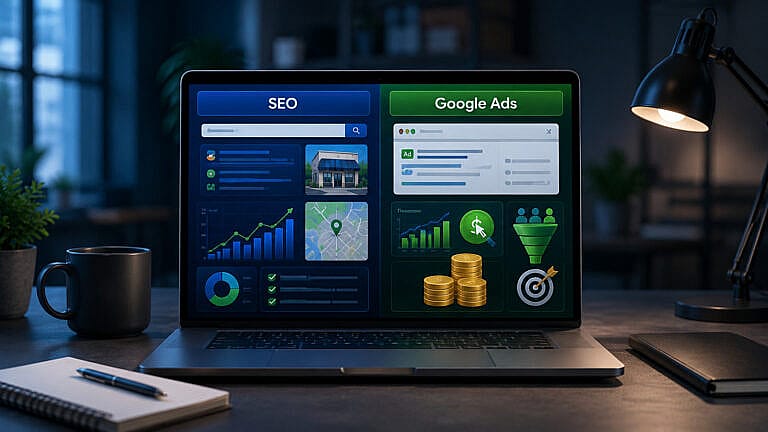
A local business could write about pricing, service comparisons, checklists, common mistakes, local guides, and buying advice. For example, HMDIA could publish topics such as “How Much Does a Website Cost in Canada?”, “SEO vs Google Ads for Small Businesses,” or “How to Rank Higher on Google Maps.”
This type of content can support both traditional Google Search and AI search. Google’s guidance for generative AI search explains that SEO fundamentals still matter for AI features in Search. You can read the official guide here: Optimizing for generative AI features in Google Search.
11. Build Local Authority and Mentions
Local SEO also depends on how trusted and known your business appears online. Mentions from local websites, community organizations, business partners, directories, news websites, and industry platforms can help build authority.
You do not need spammy backlinks. Focus on real relationships and relevant opportunities. Sponsor a local event, collaborate with nearby businesses, join local associations, publish helpful guest content, or get listed in trusted directories.
AI search tools may also use brand mentions, reviews, website content, and trusted third-party sources to understand your business. The stronger and clearer your online presence is, the easier it becomes for search systems to identify your business as a relevant option.
12. Track Your Local SEO Results
Local SEO should be measured every month. Without tracking, it is difficult to know what is working.
At minimum, monitor your Google Business Profile performance, website traffic, calls, contact form submissions, keyword rankings, reviews, and leads by service area. Google Search Console and Google Analytics are important tools for understanding how people find and use your website.
Do not focus only on rankings. A ranking is useful only if it brings the right visitors and those visitors become leads or customers.
Final Local SEO Checklist
Before you finish your local SEO update, review these important items:
- Your Google Business Profile is complete and accurate.
- Your business name, address, and phone number are consistent online.
- Your website has clear service pages and location information.
- Your content uses local keywords naturally.
- Your business is listed in trusted directories.
- You are collecting and responding to real customer reviews.
- Your website is fast, mobile-friendly, and easy to use.
- Your pages include helpful content and clear calls to action.
- LocalBusiness or related schema markup is added where appropriate.
- Your business is building local mentions, links, and authority.
- Google Search Console and Analytics are set up.
- Your website is prepared for both Google Search and AI search.
Need Help With Local SEO?
Local SEO is not only about ranking higher. It is about helping real customers find your business, trust your brand, and contact you.
At HMDIA, we build SEO-friendly websites and digital marketing strategies for small businesses that want more visibility, better leads, and stronger online growth.
Explore our website design and SEO services or create a free listing in the HMDIA Business Directory to improve your local online presence.