- Why Buying Google Reviews Could Kill Your 2026 Growth Strategy
- The Impact of Buying Google Reviews on Business Growth
- Google’s Increasing Enforcement and Policy Changes
- Review Deletion Patterns and Industry Bias
- Geographic Variations in Review Removal
- Google’s AI and Detection Methods for Suspicious Reviews
- Consequences of Review Deletions for Businesses
- Strategies to Comply with Google’s Review Policies
- The 2026 Reality: Why Your Google Business Profile is Under Siege
- The Anatomy of a High Performing Review Strategy
- The HMDIA Approach: Connecting Reviews to Conversion
- Authentic Growth Tactics: Alternatives to Buying Reviews
- Frequently Asked Questions regarding SEO 2026 and Reputation Management
- Conclusion: Build Your Reputation, Don’t Buy It
Why Buying Google Reviews Could Kill Your 2026 Growth Strategy
The 2026 digital landscape has fundamentally transformed Search Engine Optimization. As AI Overviews become the primary discovery tool for consumers, data integrity is now a business’s most valuable asset. In this high-stakes environment, taking shortcuts with your online reputation is increasingly dangerous.
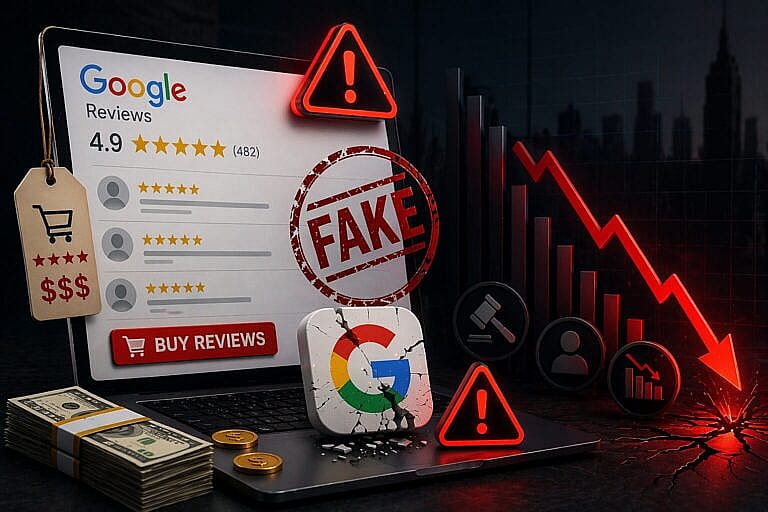
Many firms, lured by instant social proof, mistakenly choose to purchase feedback. While buying reviews seems like a quick fix, it often results in total digital invisibility. The search engine’s advanced algorithms now instantly detect inorganic patterns, making permanent content removal a standard consequence for those who bypass authentic, earned marketing strategies.
The Impact of Buying Google Reviews on Business Growth
Purchasing reviews, despite its appealing short-term gains, comes with significant risks associated with purchasing Google reviews, including potential permanent reputation damage and aggressive content removal, all while flirting with the legality of such actions. Engaging in this practice undermines long-term growth and notably impacts a local business’s visibility on Google. Google’s advanced AI detection systems now flag mass deletions, instantly discrediting businesses that manipulate sentiment. This fraudulent activity often triggers profile suppression, causing a catastrophic drop in Local SEO visibility that takes years to recover, leading to severe consequences for attracting new customers and maintaining a strong online presence.
Industry experts, including Lily Ray and Sterling Sky Inc, emphasize that digital authenticity is now mandatory. Relying on manufactured feedback creates a fragile foundation prone to collapse during major core updates, while authentic Google Reviews serve as a critical element in bolstering consumer trust. Ultimately, genuine customer engagement and favorable online reviews remain the only sustainable paths to maintaining search rankings and fostering lasting consumer confidence.
Google’s Increasing Enforcement and Policy Changes
Understanding Google’s policies on reviews is crucial as the company’s latest policy updates aggressively target review manipulation, specifically scrutinizing volume anomalies, incentivized feedback, and review gating. This heightened enforcement has triggered mass removals across the restaurant and medical sectors. Google’s User Generated Content guidelines now prioritize businesses that earn visibility through genuine merit rather than tactical artificiality, emphasizing the importance of adhering to these new standards.
Industry reports from Search Engine Roundtable confirm that Google is deploying automated systems to retroactively scan profile data. If your business shows a sudden surge in five-star ratings without authentic user engagement, you risk immediate flagging. Maintaining profile integrity is now vital for long-term local search visibility.
Earning authentic five-star Google reviews remains the gold standard for building digital authority. These high-quality ratings signal reliability to both potential customers and search algorithms, ensuring your business stands out in a crowded local market.
Google is also introducing AI-powered review summaries to highlight recurring themes. If your reviews are manufactured, these summaries will likely expose the lack of specific, authentic detail, further eroding consumer trust.
Modern platforms are also integrating verified review badges to distinguish legitimate customer experiences from bot-generated noise. These visual trust markers help search engines validate your data integrity and protect your profile from automated sweeps.
Review Deletion Patterns and Industry Bias
Recent data reveals that high-volume industries like restaurants and retail face aggressive review deletions. Google frequently purges dozens of entries per location, including content over two years old, to sanitize its database. This suggests a targeted enforcement strategy focusing on sectors prone to manipulation.
High-stakes categories, particularly medical services, endure even stricter scrutiny. Google intensifies filters on positive healthcare reviews to combat misinformation and protect consumer safety. Experts Rob Brooks and Hiroko Imai note these patterns aren’t random; Google is systematically tightening its Local SEO algorithms to prioritize authentic user experiences over artificial engagement.
Industry veterans on the Local Search Forum frequently discuss these algorithmic shifts, providing a collaborative space to dissect how Google’s evolving review filters impact local rankings and profile stability.
Geographic Variations in Review Removal
Data reveals significant geographic variations in how Google moderates content. In the United States, high-rated reviews are most frequently deleted during automated sweeps. Conversely, in Germany, lower-rated feedback is more often removed due to stringent local regulatory and legal frameworks.
These regional disparities dictate your global reputation management strategy. Understanding these nuances is vital for international businesses; a tactic successful in one territory might inadvertently trigger spam filters in another. Platforms highlight these trends, showing that Google fine-tunes its AI parameters to align with local laws and cultural expectations regarding consumer trust and digital transparency.
Google’s AI and Detection Methods for Suspicious Reviews
Google leverages advanced AI to analyze review patterns, content quality, and reviewer behavior. By scrutinizing device data and IP addresses, its algorithms detect manipulative activities that human moderators might miss. Data indicates that 66.1% of deleted reviews lack owner responses, highlighting engagement as a critical trust signal. Additionally, generic keywords like “service” or “staff” often trigger removals, as AI flags these as templated markers. Through sentiment analysis, Google distinguishes authentic feedback from incentivized content. If review volume fluctuates inconsistently with your physical foot traffic, Google’s automated tools will likely flag your profile as suspicious.
Consequences of Review Deletions for Businesses
Case studies highlight the devastating impact of review sweeps. Healthcare providers have reported losing 80 reviews instantly, while restaurants often lose years of feedback, causing Local Pack rankings to plummet. Such deletions occur without warning, crippling customer trust and conversion rates.
New businesses are especially vulnerable, facing reputational crises before gaining momentum. Beyond social proof, the loss of SEO authority can lead to a total disappearance from Zero Click Results. When your business vanishes from top suggestions, lead generation dries up overnight, proving that review shortcuts are never worth the long-term risk to your digital presence.
Strategies to Comply with Google’s Review Policies
To maintain your standing in 2026, prioritize organic reviews while avoiding prohibited practices like review gating or offering feedback incentives. Experts advocate for a transparent solicitation strategy that encourages honest, descriptive testimonials from every client.
Focus on prompt engagement and meticulous documentation of your review activities to mitigate risks during potential platform audits. Cultivating a presence on LinkedIn and YouTube further reinforces brand authenticity across multiple channels.
By leveraging legitimate automation tools and prioritizing customer experience, you build a sustainable reputation. This strategy ensures long-term visibility as Artificial Intelligence Search and evolving local listing requirements redefine the digital landscape.
Platforms like ReviewGrow help businesses navigate these complexities by focusing on authentic review acquisition rather than risky shortcuts. By automating the request process, you ensure a steady stream of legitimate feedback that satisfies Google’s detection algorithms.
The 2026 Reality: Why Your Google Business Profile is Under Siege
In the era of AI Overviews, your Google Business Profile is the cornerstone of local visibility. Google’s advanced algorithms now utilize metadata and sentiment analysis to detect fraudulent engagement with nearly 99% accuracy.
The Risks of Manipulation
Attempting to bypass organic growth through fake reviews triggers severe penalties, including permanent suspension from Google Maps. Automated purges often target profiles showing sudden spikes in high-rated, non-descriptive feedback.
- Detection: AI analyzes IP addresses and typing rhythms.
- Consequences: Mass review deletions and loss of consumer trust.
- Industry Shifts: Medical and retail sectors face heightened scrutiny.
Authenticity is the only sustainable strategy for long-term SEO success.
The Anatomy of a High Performing Review Strategy
Success in 2026 demands quality over quantity. To dominate local search, aim for a 4.8-star rating; this signals authenticity to Google’s AI, whereas a perfect 5.0 often triggers quality flags.
Mastering Review Velocity and Recency
Consistency is vital. Google favors steady Review Velocity over suspicious bursts of feedback. Furthermore, 73% of consumers ignore reviews older than one month, making a fresh stream of user-generated content essential for visibility.
The Risks of Manipulation
Buying reviews or “review gating” violates Google’s strict policies, leading to permanent profile suspension or mass deletions. Use organic automation to ensure compliant, sustainable growth.
| Metric | Organic Growth | Purchased Reviews |
|---|---|---|
| Search Visibility | Sustainable | Risk of Deletion |
| Algorithm Safety | Compliant | Policy Violation |
The HMDIA Approach: Connecting Reviews to Conversion
At HMDIA, we treat digital marketing as a cohesive ecosystem where reputation drives revenue. In the SEO 2026 landscape, reviews are critical signals for both search visibility and brand authority.
The Review to Website Funnel
Positive reviews lose value if linked to slow, outdated sites, which can negatively impact SEO performance. By building high-performance WordPress designs, we ensure that consumer trust not only translates into leads immediately but also enhances your site’s visibility on search engines, bolstering its reputation through authentic customer feedback.
Optimizing for AI Discovery
Descriptive feedback fuels Answer Engine Optimization. Authentic customer reviews provide the semantic data necessary to rank in complex AI Overviews and long-tail queries.
Proactive Engagement
Responding to reviews is a vital ranking signal. Active engagement proves reliability and improves visibility within Google’s dynamic local ecosystem.
Authentic Growth Tactics: Alternatives to Buying Reviews
Building a legitimate reputation requires long-term excellence, shielding your brand from volatile algorithm updates. In 2026, shortcuts like purchasing feedback lead to de-indexing. Prioritize Authenticity Marketing to create a competitive moat that rivals cannot replicate.
Automating Feedback: How to Make Leaving a Review a One-Click Process
Friction prevents reviews. Simplify the Customer Experience using QR codes or Review Automation in your workflow. This ensures organic participation without using illegal incentives.
Tools for Success: Leveraging Reviewlee and CRM Integrations
Tools like Reviewlee and CRM integrations scale Reputation Management. Automated invites ensure the Review Consistency that Local SEO algorithms crave, protecting your reputation through proactive sentiment tracking.
Frequently Asked Questions regarding SEO 2026 and Reputation Management
Can Google detect purchased reviews?
Yes. Google utilizes advanced AI and spam algorithms to scrutinize metadata, IP addresses, and account history. Patterns like sudden review spikes or accounts lacking prior engagement trigger instant flags. Experts note that Google now analyzes device data and timing to identify non-organic manipulation.
How do I handle fake negative reviews?
Report violations via your Google Business Profile dashboard. Avoid retaliation; instead, document evidence for Google Support. Maintaining professional reporting standards is vital for long-term discoverability and policy compliance.
Does responding to reviews impact rankings?
Absolutely. Regular interaction signals business responsiveness, boosting engagement metrics. Since many deleted reviews lack replies, consistent engagement demonstrates authenticity and improves your performance in zero-click search results.
Conclusion: Build Your Reputation, Don’t Buy It
In 2026, consumer trust is non-negotiable. Google Business Profile integrity now serves as the bedrock of SEO success. Shortcuts like review manipulation offer negligible gains while risking severe penalties under Google’s core updates, which prioritize genuine user-generated content over raw volume.
Your online reputation is a critical asset; protecting it requires authentic marketing and active engagement. Prioritizing transparency ensures long-term discoverability and authority. By adhering to strict content policies and fostering organic interactions, businesses safeguard their local search rankings against sophisticated AI detection systems designed to flag suspicious patterns and deceptive growth tactics.
Consistently delivering on promises is the foundation of brand trust, which acts as a shield against algorithmic volatility. In 2026, search engines prioritize businesses that demonstrate this reliability through authentic, unmanipulated customer interactions.
References
- Google’s 2026 Crackdown: Lily Ray Says Your SEO Strategy is Failing
- Why Google Reviews will matter more than your website in 2026
- Google Reviews Being Removed 2026: What Business Owners …
- Why Your Google Reviews Are Either Killing or Growing … – Reddit
- Why Businesses Should Avoid Buying Google Reviews – Logicsofts